Between eleven and fourteen, everything changes — including how a child needs to be taught. The middle years at St. Peter’s meet that change head-on. Subjects sharpen: General Science in Class VI becomes distinct Physics, Chemistry and Biology by Class VII. Timetables grow more complex. And, crucially, students learn how to learn — the organisation, note-making and revision habits that will carry them through ICSE and far beyond.
The subject structure
| Stage | Subjects |
|---|---|
| Class VI | English, Hindi, Marathi, History and Civics, Geography, Mathematics, General Science, Computers, Art, Music, Physical Education. |
| Class VII | English, Hindi, Marathi, History and Civics, Geography, Mathematics, Physics, Chemistry, Biology, Computers, Art, Music, PE. |
| Class VIII | English, Hindi, Marathi, History and Civics, Geography, Mathematics, Physics, Chemistry, Biology, Computers, Art, PE. |
Building academic independence
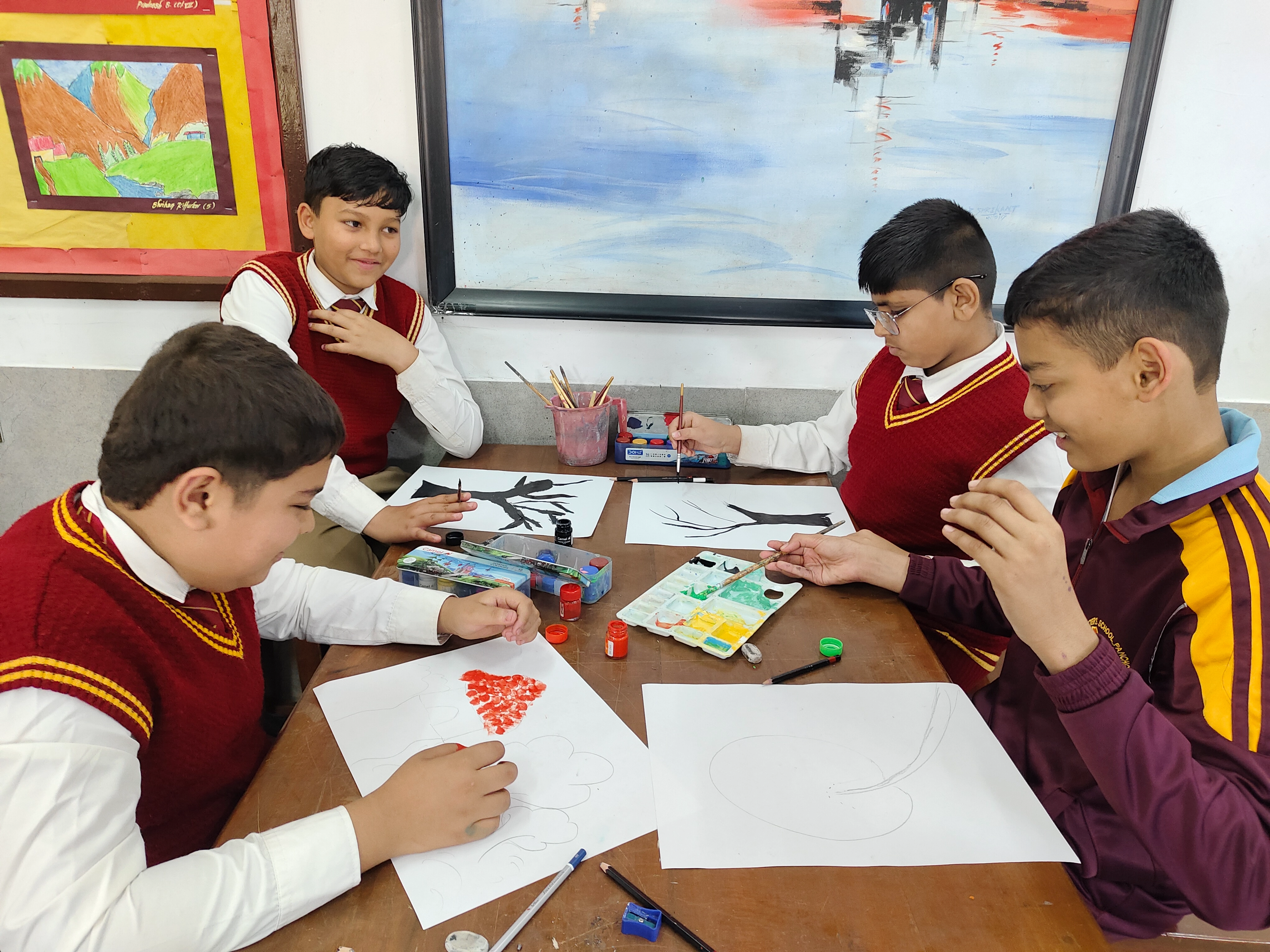
We teach method as deliberately as content. Students learn to plan homework and revision, keep organised notes, read questions closely, use evidence and check their own work. Lessons mix discussion, reading, written practice, demonstrations, projects and real laboratory time — because a scientist is made at the bench, not the blackboard. For boarders, supervised evening study turns these habits into routine.
By the end of Class VIII, a St. Peter’s student walks into the ICSE years knowing the ground beneath them: three sciences met properly, three languages in daily use, and study habits that no longer need enforcing.